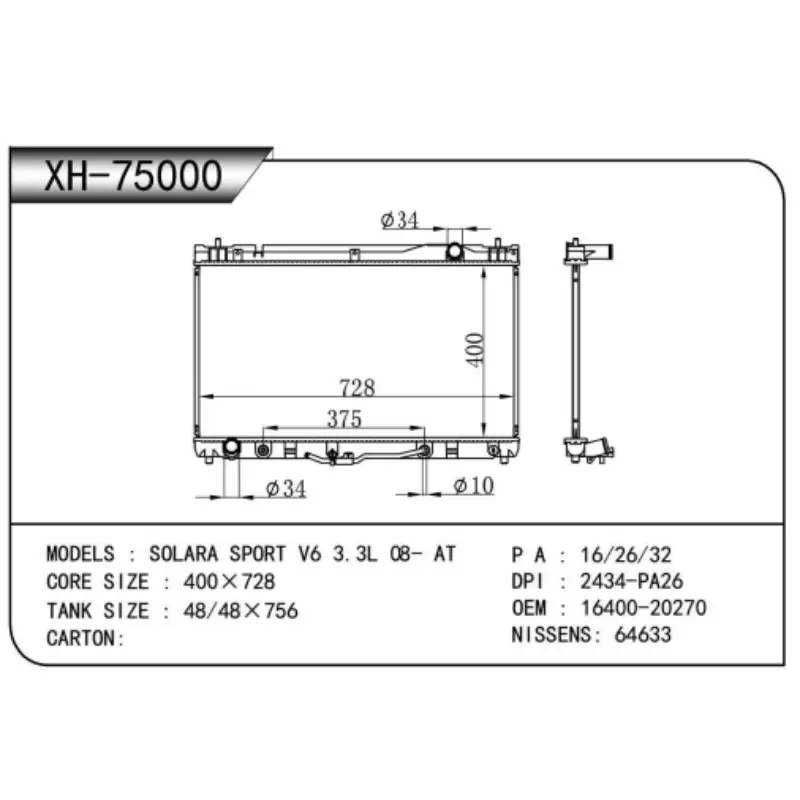
Information asymmetry and high communication costs have long frustrated both sides of the global radiator trade. This guide examines how Chinese suppliers and international buyers can lower barriers, cut sourcing costs, and build durable partnerships — across aftermarket, OEM replacement, performance, and heavy duty radiator categories.
Industry Analysis·Auto Parts & Supply Chain·Est. reading time: 6 min
Aftermarket RadiatorOEM Replacement RadiatorPerformance RadiatorHeavy Duty Radiator
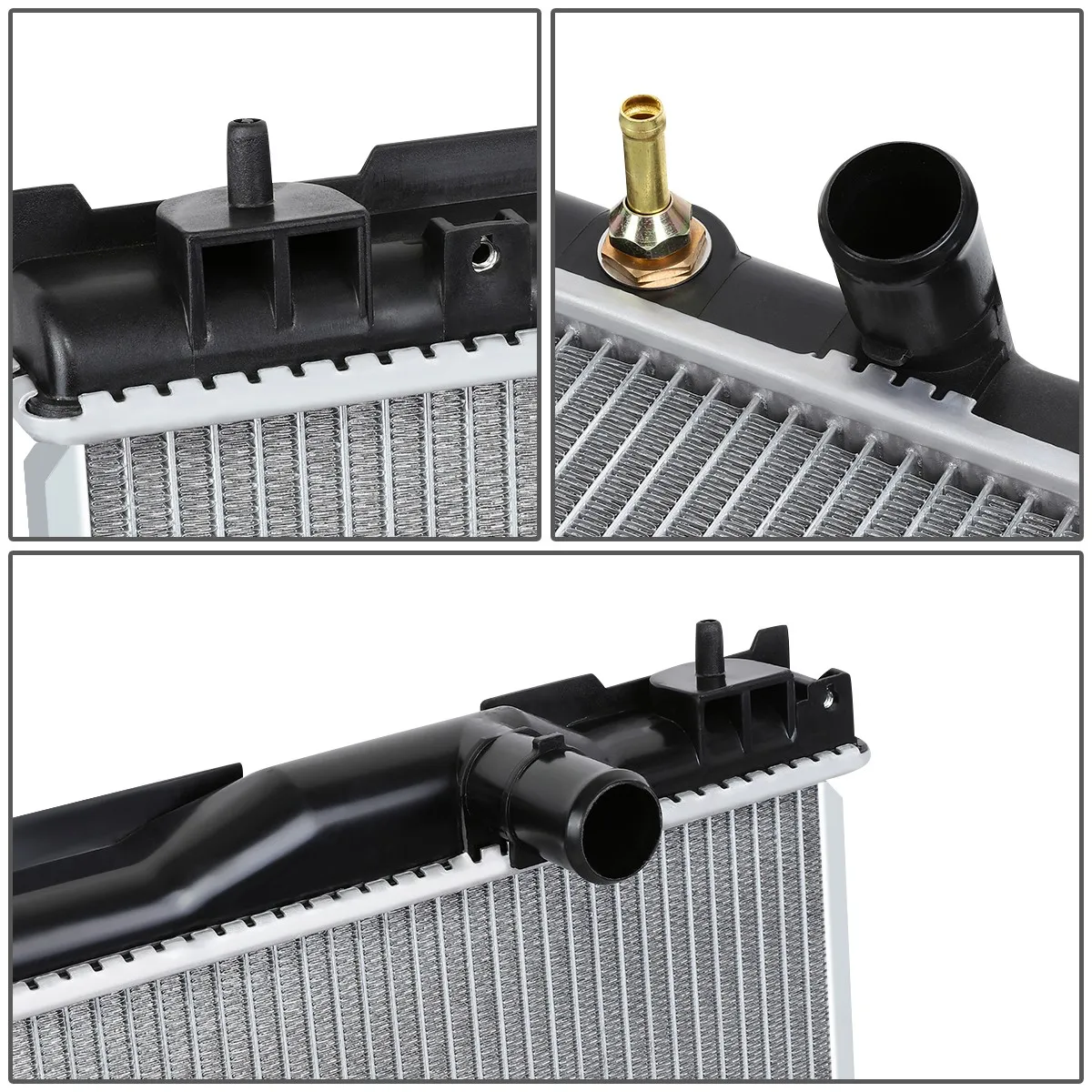
I. Industry Overview: Intensifying Competition, Dual-Side Struggles
As manufacturing processes have become increasingly standardized and widely adopted, the technical barriers to entry in China’s automotive radiator industry have fallen dramatically. Competition has long since shifted away from technological innovation toward an all-encompassing race to the bottom across internal management, operational efficiency, and marketing strategy. Enterprises genuinely committed to R&D and process innovation are now few and far between.
Today’s Chinese factories produce a wide spectrum of products — from standard aftermarket radiators and OEM replacement radiators for everyday passenger vehicles, to specialized performance radiators built for high-output engines, and ruggedized heavy duty radiators designed for commercial trucks and off-highway machinery. Yet despite this breadth, both sides of the supply chain remain trapped in structural inefficiency.
On the buyer side, foreign procurement teams — unable to reliably assess supplier quality at a distance — routinely resort to multi-vendor price comparisons, continuously driving down quotes in pursuit of the most competitive terms.
On the supplier side, large factories leverage established sales channels and stronger online visibility to sustain relatively higher pricing, while small and mid-sized manufacturers of comparable or superior quality remain largely invisible to overseas buyers due to weak marketing capabilities and insufficient international exposure. The result is a persistent order drought for capable smaller suppliers.
This structural information asymmetry not only leaves quality small and mid-sized suppliers at a systematic disadvantage, but also significantly raises the sourcing costs — in both time and money — for overseas buyers. How to effectively dismantle communication barriers between Chinese suppliers and international buyers, and reduce transaction costs on both sides, has become one of the most pressing practical challenges facing the industry today.
II. Path Forward I: Chinese Suppliers Going Global Proactively
1. LinkedIn Content Marketing (Best ROI Starting Point)
Factory owners and sales personnel are advised to create professional company pages and personal profiles, committing to one to two posts per week. Effective content types include factory floor videos, radiator production process breakdowns, new energy vehicle liquid cooling technology insights, quality control case studies, and export success stories.
Suppliers specializing in OEM replacement radiators or performance radiators are particularly well positioned to demonstrate technical differentiation through short-form video — showing fitment accuracy, pressure testing, and material specifications that generic low-price competitors cannot match.
For audience growth, join vertical industry groups such as “auto parts,” “aftermarket,” and “NEV thermal management,” and proactively connect with distributors in target markets — searching terms like “auto parts distributor + [country]” — communicating in both Chinese and English to reduce language friction.
2. Building a Multi-Channel Content Presence
Beyond LinkedIn, suppliers can simultaneously develop the following free or low-cost channels:
- YouTube: Upload factory walkthroughs, product installation demonstrations, and performance comparison videos, with titles and descriptions optimized around core search keywords such as “aftermarket radiator supplier China” or “heavy duty radiator manufacturer”;
- Industry communities: Actively participate in Facebook auto parts groups, WhatsApp industry chats, and relevant Reddit communities;
- Industry cluster collaboration: Join local automotive parts associations or industrial parks to participate in co-marketing initiatives or share overseas distribution channels.
3. Preparing a Standardized Factory Capability Package
Suppliers are strongly encouraged to prepare a bilingual (Chinese and English) PDF or PPT capability document covering: quality certifications, production capacity, key client references, price ranges, and lead times. Clearly identify which product lines are covered — whether aftermarket radiators, OEM replacement radiators, performance radiators, or heavy duty radiators — so buyers can immediately assess category fit. This package significantly reduces first-contact friction and accelerates buyer decision-making.
4. Virtual Trade Shows and Sustained Content Output
Actively participate in Canton Fair online matchmaking events or virtual trade shows. Maintain consistent content output over a three-to-six month horizon, centering the narrative on “consistent quality, fast response, and strong value for money” — rather than competing on price alone. Once trust is established, repeat orders and word-of-mouth referrals will substantially reduce long-term customer acquisition costs.
Key insight: Suppliers that clearly position themselves within a specific category — such as heavy duty radiators for North American fleet operators, or performance radiators for the European motorsport aftermarket — attract higher-quality leads at lower acquisition cost than generalist suppliers competing purely on price.
III. Path Forward II: Efficient Sourcing for International Buyers
1. A Structured Verification Process (Effective Risk Control)
A phased verification approach is recommended:
- Request the supplier’s standardized capability package along with recent quality inspection reports — verifying whether their stated product categories (e.g., OEM replacement radiators or heavy duty radiators) match their actual production capability;
- Place a small-batch sample order, combining video-based acceptance review with independent third-party inspection;
- Arrange a video factory tour, or commission a local sourcing agent to conduct an on-site audit.
2. Prioritizing Small Specialized Manufacturers
Where quality is comparable, small and mid-sized manufacturers specializing in niche categories — such as NEV liquid cooling systems, performance radiators for specific engine platforms, or heavy duty radiators for commercial and off-road applications — often offer greater service flexibility and more competitive pricing. They deserve priority consideration in any supplier evaluation process.
3. Multi-Source Information Verification Tools
- LinkedIn: Review a supplier’s page for content activity and professional credibility; contact factory sales representatives directly and conduct a quick initial assessment via video call;
- Trade data platforms (such as ImportGenius, Panjiva, or Tendata): Review a supplier’s historical export records to verify actual export capability and primary target markets — particularly useful for confirming whether a claimed aftermarket radiator exporter has genuine volume history;
- Industry associations and distributor communities: Seek Chinese supplier recommendations through automotive parts dealer groups or chambers of commerce in target markets.
IV. A Mutually Beneficial Path Forward
Taken together, the core logic for resolving the industry’s information asymmetry lies in both parties jointly building a standardized framework for communication and evaluation.
Chinese small and mid-sized manufacturers — whether focused on aftermarket radiators, OEM replacement radiators, or more specialized segments like performance radiators and heavy duty radiators — should focus on “professional visualization”: establishing digital credibility through video content and certification documentation. International buyers, meanwhile, should develop a clear supplier evaluation checklist, replacing blind price competition with structured, process-driven assessment.
A growing body of successful cases demonstrates that through a combined strategy of platform content marketing and LinkedIn outreach, the cost of a first effective connection between buyer and supplier can be kept extremely low — with stable, long-term partnerships often forming within three to six months.
Key Takeaway
The key to reducing transaction costs lies not in unilateral price pressure, but in both parties co-building an efficient and transparent foundation of trust. Whether the product is a standard aftermarket radiator, a precision-fit OEM replacement radiator, a high-performance cooling solution, or a ruggedized heavy duty radiator for demanding applications — the pathway to reliable, cost-effective sourcing is the same: clarity, verification, and consistent communication. © 2025 AutoParts Insight. All rights reserved. Tags: Aftermarket Radiator · OEM Replacement Radiator · Performance Radiator · Heavy Duty Radiator · China Supplier · Auto Parts Sourcing